Aloe vera: what it is, what it’s used for, and how to use it on the skin

Aloe vera, also known as sábila in Spanish, is a plant with fleshy leaves that contain a gel inside. Ingredients derived from this plant are commonly found in creams, moisturising gels, hygiene products and after-sun care.
But what is aloe vera used for on the skin, and what should you know before choosing a cosmetic product? Understanding the difference between the plant, the ingredient and the finished product helps you assess its uses without expecting the same results from every formula.
What is aloe vera?
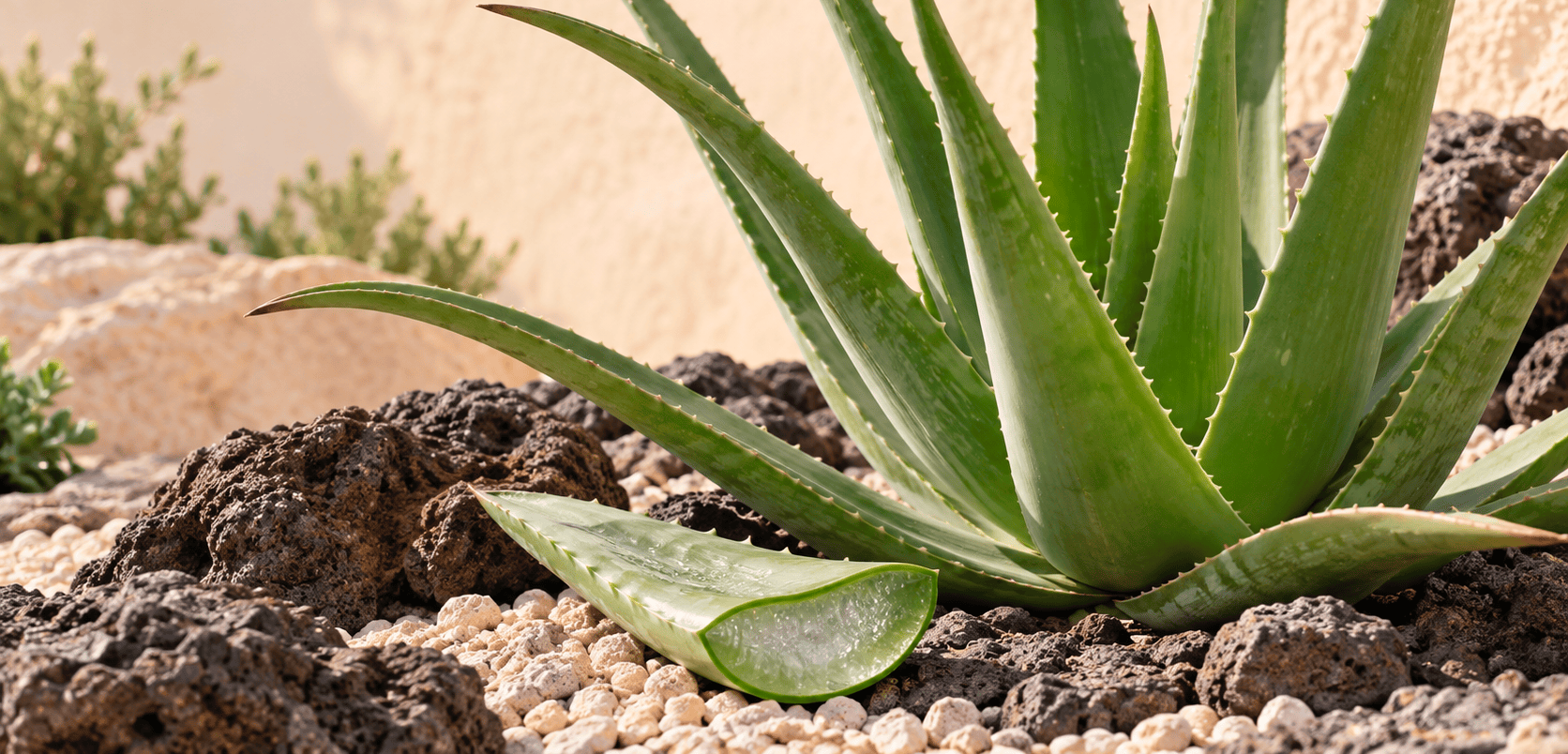
Aloe vera is a succulent plant adapted to warm, dry environments. Its leaves store water and contain a gel-like substance inside. The image of a cut-open green leaf is often associated with aloe cosmetics.
The Official College of Pharmacists of Madrid explains that aloe vera is also known as sábila and describes its use in the cosmetics industry. Although its article also discusses medicinal uses, these should be distinguished from the everyday care provided by a cosmetic product.
On an ingredient list, you may find names such as Aloe Barbadensis Leaf Juice. Reading the full list helps you understand what accompanies aloe in the formula, rather than choosing solely based on the image or name on the packaging.
The inner gel and the leaf latex are not the same
When discussing aloe, it is useful to identify which part of the plant is being used. The US National Center for Complementary and Integrative Health, part of the NIH, distinguishes between inner leaf gel, latex and whole leaf.
- Inner leaf gel: comes from the inside of the leaf.
- Latex: a different substance found in the outer layer of the leaf.
- Whole leaf: may include both gel and latex.
This distinction matters because their uses and precautions are not interchangeable. Applying a product to the skin is also different from ingesting a preparation. A cosmetic cream or gel for external use is not a product intended for drinking.
What is aloe vera used for in cosmetics?
In everyday skin care, aloe is found in formulas designed to moisturise, cleanse or care for the skin after sun exposure. To understand what you can expect, it is most useful to identify the purpose of the complete product. A shared ingredient does not make a cream, a cleanser and an after-sun product equivalent.
Moisturising the face and body
Moisturising creams and gels with aloe can be used as the care step after cleansing. The finish depends on the entire formula: sharing aloe as an ingredient does not mean sharing the same texture, absorption or feel on the skin.
If you are deciding between product formats, read about the differences between aloe vera gel and cream. There, we compare specific products to help you choose.
After-sun care
The American Academy of Dermatology includes moisturisers containing aloe or soy among its recommendations for relieving the discomfort of sunburn. This general recommendation does not show that every aloe formula has the same effect, nor does it constitute an endorsement of a brand. Severe sunburn or sunburn accompanied by feeling unwell requires medical assessment.
Our guide to after-sun care with aloe vera explains when to use it. An after-sun product does not replace sunscreen or make up for excessive sun exposure.
Daily hygiene
Aloe can be combined with other ingredients in soaps and shower gels. In these cases, the product’s main purpose is cleansing. The presence of aloe in a shower gel does not mean it should be left on the skin like a moisturiser: follow its washing and rinsing instructions.
How to incorporate an aloe vera product into your routine
Start with the step you need to address, rather than adding several products at once. These three checks can help you choose:
- Define the purpose: cleansing, moisturising or after-sun care.
- Check the application areas: face, body or both, depending on the product.
- Review the complete formula: especially if you have a known allergy or want to avoid a particular ingredient.
Then use the cosmetic product according to the instructions on its packaging. To explore your options, browse Tabaiba Cosmética’s pure aloe vera category and compare the information on each product page.
If you prefer a cream and are interested in where the ingredient comes from, our guide to choosing an aloe vera cream from the Canary Islands explains what information to check before buying.
Precautions to keep in mind
A plant-based ingredient is not necessarily tolerated equally well by everyone. The NCCIH notes that aloe gel applied to the skin is generally well tolerated, although reactions such as itching, burning or rashes have been reported. If a product causes discomfort, stop using it and seek medical advice if the symptoms persist.
Studies on a specific preparation do not prove that every cosmetic product containing aloe treats diseases. For a skin injury or condition, seek professional advice and do not replace treatment with an everyday skin care product.
Frequently asked questions
Are sábila and aloe vera the same?
Sábila is a common Spanish name for aloe vera. You may come across both terms when reading about this plant.
Is an aloe leaf the same as a cosmetic gel?
No. The leaf contains different parts, whereas a cosmetic product has a defined formula and intended use. A cut leaf and a finished product should not be considered identical alternatives.
Can aloe vera be used on the face?
Choose a product whose description specifies facial use and follow its instructions. Do not assume that every aloe product is suitable for all areas of the body.
Tabaiba Cosmética products for everyday care
If you want to incorporate this ingredient into your routine, you can compare these two options:
- Aloe Vera Moisturising Gel 300 ml: a hydrogel intended for face and body care.
- Aloe Vera Face and Body Cream 300 ml: a cream alternative for both areas.